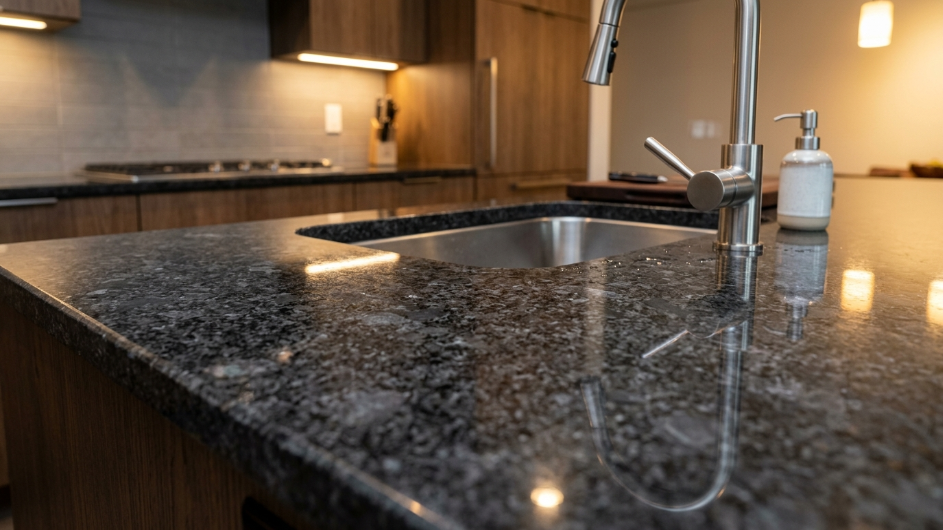
Lakewood sits along the western edge of the Denver metro area, bordered by Bear Creek to the south and the foothills to the west. Many of the homes here date to the 1950s and 1960s, when the city grew rapidly as one of Colorado’s first planned suburbs. That older housing stock means a lot of original laminate counters are reaching the end of their usable life, which is one reason countertop replacement has become a common project across the area’s neighborhoods.
How Countertop Installation Lakewood Projects Typically Proceed
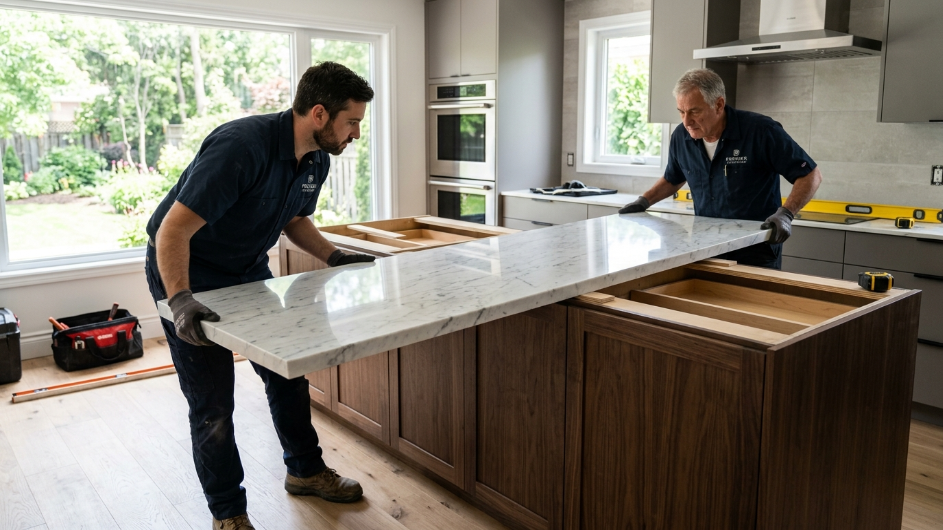
Most installations follow a template that doesn’t vary much regardless of material. A technician visits the home to take precise measurements of the cabinet base, including any cutouts needed for sinks, cooktops, or outlets. From there, a template is created, either with laser measuring tools or a physical template kit, and sent to the fabrication shop.
Fabrication itself can take anywhere from three days to three weeks depending on the material and the shop’s backlog. Quartz and granite typically require the longest lead times because slabs must be cut, polished, and edge-profiled before delivery. Laminate and butcher block, by contrast, can sometimes be installed within a day or two of ordering.
Steps Involved Before Installation Day
- Removal of the old countertop and disconnection of plumbing fixtures
- Inspection of the cabinet base for level surfaces and structural soundness
- Final template confirmation, often digital, sent to the fabricator
- Scheduling of the fabrication and delivery window
Homeowners in Lakewood often schedule this work around the same time as other kitchen updates, since removing old counters exposes the cabinet tops and makes it easier to address any water damage near the sink area before new material goes down.
Material Choices and Cost to Countertop Installation Lakewood
Countertop material affects both price and installation time significantly. According to industry pricing data compiled by HomeAdvisor and Angi, national average costs run roughly as follows.
| Material | Average Cost Per Square Foot (Installed) | Typical Lifespan |
|---|---|---|
| Laminate | $20 – $50 | 10-20 years |
| Butcher Block | $35 – $70 | 15-20 years |
| Granite | $50 – $100 | 25+ years |
| Quartz | $60 – $120 | 25+ years |
| Marble | $75 – $150 | 20+ years with sealing |
Quartz has overtaken granite in popularity over the past decade largely because it doesn’t require sealing. Granite is a natural stone and porous, so it needs periodic sealant application to resist staining. Quartz, engineered from crushed stone and resin, resists staining without that maintenance step. Both materials are rated for heat resistance, though placing a hot pan directly on either surface for extended periods is still not recommended by most manufacturers.
Local Factors That Influence Countertop Installation Lakewood
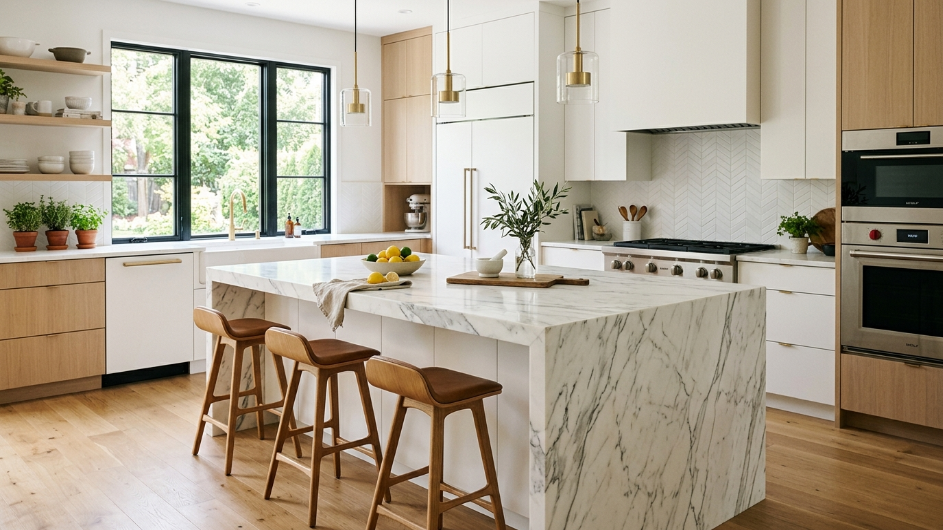
Colorado’s Front Range climate brings dry winters and low humidity, which is actually favorable for wood-based countertops like butcher block since it reduces warping risk compared to humid regions. That said, homes near Bear Creek or the South Platte drainage areas sometimes deal with higher indoor humidity swings seasonally, something a contractor may factor into material recommendations.
Lakewood’s median household income sits above the Colorado state average, and a good portion of the housing stock along corridors like Alameda Avenue and Colfax Avenue consists of mid-century ranch homes now undergoing full kitchen remodels. Older homes built before 1975 sometimes have cabinet boxes that are slightly out of level after decades of settling, which can add time to the installation if shims or leveling work is required before the new surface goes on.
Permit Requirements
Countertop replacement alone usually does not require a building permit in most Colorado municipalities, since it doesn’t alter plumbing, electrical, or structural elements. However, if the project includes moving a sink, adding an island, or relocating outlets, a permit through the local building department is typically necessary. It’s worth confirming this with the city before work begins, since requirements can change and inspectors do check for unpermitted plumbing modifications during resale inspections.
Maintenance After Countertop Installation Lakewood
Once a new countertop is in, care requirements depend heavily on material. Quartz and laminate need only mild soap and water. Granite and marble benefit from a sealant reapplication roughly once a year, tested simply by dripping water on the surface and checking whether it beads or absorbs. Butcher block should be oiled periodically with food-safe mineral oil to prevent drying and cracking, especially in Colorado’s low-humidity climate.
- Wipe spills promptly, especially acidic liquids like wine or citrus juice on natural stone
- Use cutting boards rather than cutting directly on any surface
- Avoid abrasive cleaners on quartz, which can dull the resin finish over time
- Reseal natural stone annually or as manufacturer guidelines recommend
Choosing Between Slab and Prefabricated Countertop Installation Lakewood
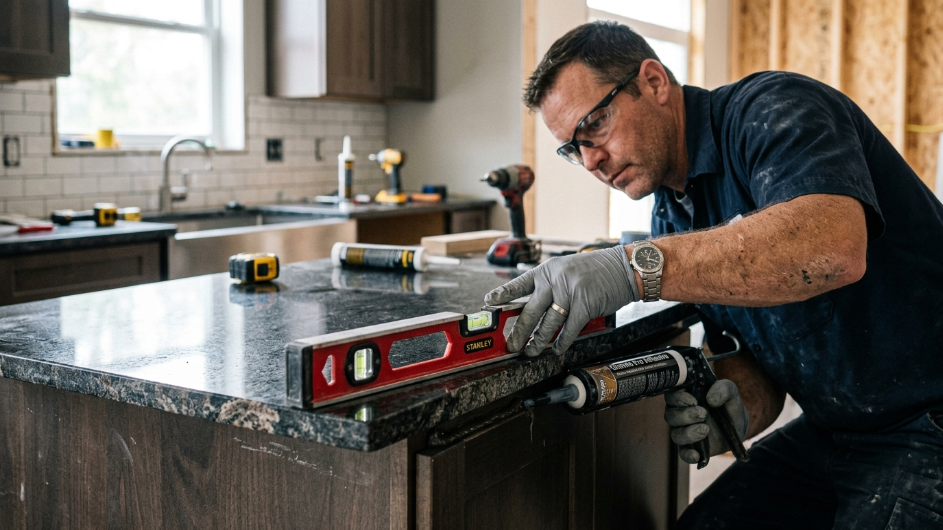
Not every countertop comes from a single cut slab. Prefabricated (or “prefab”) countertops arrive in standard sizes, already cut and edge-finished at the factory, then trimmed on-site to fit. Slab countertops, by contrast, are custom-cut for a specific kitchen using a template. Prefab options cost less and install faster, sometimes in a single day, because there’s no waiting on a fabrication shop’s schedule. Slab countertops cost more but allow for continuous seams across large islands or L-shaped counters, something prefab pieces can struggle to match without a visible seam line.
Big box retailers in the Denver metro, including stores along West Colfax and the Belmar shopping district, often carry prefab granite and quartz in limited color selections. Specialty fabricators tend to offer a wider range of slab colors and patterns, along with the option to see the actual slab before it’s cut, which matters for stones like granite and marble where veining varies piece to piece.
Working With a Contractor: Questions Worth Asking
A homeowner comparing bids for countertop installation should ask a few direct questions before signing anything. Price alone doesn’t tell the whole story.
| Question | Why It Matters |
|---|---|
| Who fabricates the material? | In-house fabrication shops often control timelines better than subcontracted ones |
| Is the estimate based on a physical or digital template? | Digital templates tend to reduce measurement error |
| What happens if the slab is damaged during cutting? | Reputable shops absorb this cost rather than passing it to the customer |
| Is old countertop removal and disposal included? | Some quotes exclude haul-away, adding an unexpected fee later |
| What’s the warranty on seams and edge work? | Seam failure is one of the more common post-installation complaints |
Licensing requirements for general contractors vary across Jefferson County, where Lakewood is located. Countertop-only work performed by a specialty trade generally falls outside the scope of contractor licensing needed for structural remodeling, but it’s still reasonable to ask for proof of liability insurance before allowing crews into a home.
Common Countertop Installation Lakewood Problems and How They’re Handled
Seams are the most frequent source of complaints after installation. A well-cut seam sits nearly flush and matches color and pattern closely, while a poor one shows a visible ridge or color mismatch. Fabricators use a color-matched epoxy to fill and polish seams, and the quality of that work depends heavily on the technician’s experience rather than the material itself.
Chips can occur during transport or installation, particularly around sink cutouts where the material is thinnest and most vulnerable to stress. Granite and quartz can usually be repaired invisibly with color-matched resin if the chip is caught early. Overhangs on islands without adequate support brackets are another common issue; most fabricators recommend corbels or steel bracing for any unsupported overhang beyond ten to twelve inches, particularly with heavier materials like granite or marble.
- Seam placement should avoid high-visibility areas like directly in front of the sink when possible
- Unsupported overhangs need bracket or corbel support beyond a certain length
- Sink cutout corners are the most chip-prone area during fabrication and transport
- Color variation between the sample chip and the full slab is common with natural stone and should be checked before final approval
Frequently Asked Questions
How long does a typical countertop installation take?
The actual installation, once material arrives, usually takes four to eight hours for a standard kitchen. Full project timelines including fabrication can run one to four weeks.
Can old countertops be removed without damaging cabinets?
In most cases, yes. A careful contractor scores adhesive seams and lifts the old surface in sections rather than prying it off in one piece, which reduces the chance of cabinet damage.
Is it necessary to replace the sink when replacing a countertop?
Not necessarily. Undermount sinks can sometimes be reused if they’re in good condition and match the new cutout dimensions, though this depends on the sink’s mounting hardware and condition.
What’s the most durable countertop material available?
Quartz and granite are generally considered the most durable options for daily kitchen use, both resisting scratches and impact better than laminate or wood.
How much of the total cost is labor versus material?
Labor typically accounts for 20 to 40 percent of the total project cost, with material and fabrication making up the remainder. Complex cuts, multiple seams, or waterfall edges on an island push labor costs higher.
Does homeowners insurance cover countertop damage?
Standard homeowners policies generally cover sudden accidental damage, such as a dropped heavy object cracking a stone counter, but not gradual wear like staining or scratching from normal use. Coverage specifics vary by policy and insurer.
Final Thoughts
Countertop installation is a process with predictable steps, but material choice, home age, and local permit rules all shape the actual timeline. Homeowners who plan ahead for measurement, fabrication lead times, and maintenance needs tend to get the smoothest results.